Game-Changing AI Technologies That Are Transforming Digital Marketing Strategies
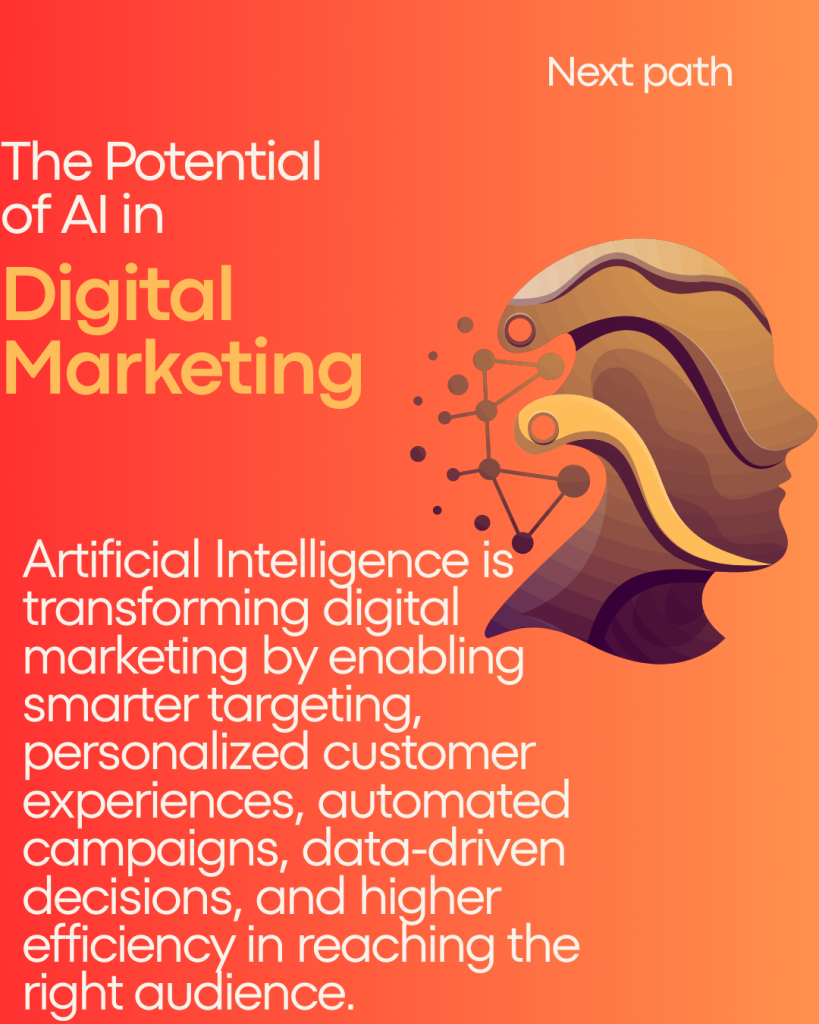
The future of AI in marketing means using intelligent technology to automatically understand customers, predict their needs, personalize communication, and optimize marketing strategies for better results with less human effort. Artificial Intelligence is transforming digital marketing by enabling smarter targeting, personalized customer experiences, automated campaigns, data-driven decisions, and higher efficiency in reaching the right audience.
The future of digital marketing is being reshaped at an unprecedented pace, and at the center of this transformation lies Artificial Intelligence (AI). What once depended heavily on manual analysis, intuition, and broad targeting has now evolved into a data-driven, automated, and highly personalized ecosystem. As businesses compete for attention in an increasingly digital world, AI is no longer a luxury or experimental technology—it is becoming the foundation of modern digital marketing strategies.
AI in digital marketing refers to the use of advanced technologies such as machine learning, natural language processing, predictive analytics, and automation to understand consumer behavior, optimize campaigns, and deliver personalized experiences at scale. In the coming years, AI will not simply support marketers; it will actively guide decision-making, reduce human effort, and unlock new growth opportunities that were previously impossible with traditional methods.
One of the most significant ways AI will shape the future of digital marketing is through hyper-personalization. Consumers today expect brands to understand their needs, preferences, and timing. AI systems analyze massive volumes of data—from browsing behavior and search patterns to purchase history and social interactions—to create highly tailored content and offers. In the future, marketing messages will no longer be generic. Instead, AI will deliver the right message to the right person at the right moment, increasing engagement, trust, and conversion rates.
Another major shift driven by AI is predictive marketing. Rather than reacting to past performance, marketers will increasingly rely on AI to forecast future outcomes. AI algorithms can predict customer churn, buying intent, lifetime value, and even upcoming market trends. This allows businesses to plan campaigns proactively, allocate budgets more efficiently, and stay ahead of competitors. As AI models become more accurate, decision-making in digital marketing will move from guesswork to precision.
Automation will also define the future of AI in digital marketing. Routine tasks such as email scheduling, ad bidding, content distribution, customer segmentation, and performance reporting are already being automated, and this trend will accelerate. AI-powered tools will manage campaigns in real time, optimizing creatives, audiences, and spending without constant human intervention. This does not eliminate marketers’ roles; instead, it frees them to focus on strategy, creativity, and brand storytelling—areas where human insight remains essential.
Content creation is another area where AI’s influence will continue to grow. AI tools can already generate ad copies, blog drafts, social media captions, and video scripts based on data and user intent. In the future, AI will help marketers produce content faster while aligning it closely with SEO requirements, audience interests, and platform algorithms. Rather than replacing human creativity, AI will act as a powerful assistant that enhances productivity and consistency.
Future of AI will also transform how businesses understand and interact with customers through conversational marketing. Chatbots, voice assistants, and AI-driven customer support systems will become more intelligent, empathetic, and context-aware. These tools will handle complex customer queries, guide users through purchase journeys, and collect valuable insights that further improve marketing strategies.
In conclusion, the future of AI in digital marketing is not about replacing humans, but about empowering them. AI will enable smarter decisions, deeper customer connections, and scalable growth in a highly competitive digital landscape. Businesses and professionals who adapt early, learn AI-driven tools, and integrate AI into their marketing mindset will gain a strong advantage. As technology continues to evolve, AI will redefine digital marketing from a supportive function into a strategic growth engine for the future.
How AI is transforming in Digital Marketing ?
AI is transforming digital marketing at an immense pace, making complex tasks easier. When used strategically with the right prompts and direction, AI can help build future-ready, large-scale brands.
Artificial Intelligence (AI) is no longer a futuristic concept—it is already reshaping the digital marketing industry in powerful ways. From automating routine tasks to delivering highly personalized customer experiences, AI has become a core driver of modern marketing success. Businesses that understand and adopt AI are gaining a strong competitive advantage, while those that ignore it risk falling behind. AI is transforming how marketers analyze data, create content, target audiences, and measure performance, making digital marketing smarter, faster, and more effective than ever before.
1. AI Is Making Marketing Data-Driven and Intelligent
One of the biggest transformations AI has brought to digital marketing is its ability to analyze massive amounts of data in real time. Earlier, marketers relied heavily on manual analysis and assumptions. Today, AI tools can process user behavior, search patterns, purchase history, and engagement data within seconds.
- What customers want
- When they are most likely to buy
- Which channel performs best
- What content drives the highest engagement
This data-driven approach reduces guesswork and allows businesses to make smarter marketing decisions backed by insights rather than intuition.
2. Personalization at Scale
Personalization is no longer optional in digital marketing, and AI has made it scalable. AI analyzes customer behavior and preferences to deliver personalized content, product recommendations, emails, and ads to each individual user.
- E-commerce platforms recommend products based on browsing history
- Email marketing tools send personalized subject lines and content
- Websites show dynamic content based on user location and interests
Key benefits of AI-powered personalization:
- Higher engagement rates
- Better customer experience
- Increased conversions and loyalty
- Stronger brand trust
AI allows brands to treat thousands or even millions of users as individuals.
3. AI in Content Creation and Optimization
Content is the backbone of digital marketing, and AI is transforming how content is created and optimized. AI-powered tools help marketers generate blog ideas, write drafts, optimize headlines, and improve readability.
- Generating content ideas based on search trends
- Optimizing content for SEO
- Improving grammar, tone, and clarity
- Creating ad copies and social media captions
While AI does not replace human creativity, it acts as a powerful assistant that saves time and boosts productivity. Marketers can focus more on strategy while AI handles repetitive content tasks.
4. AI Is Revolutionizing SEO
Search Engine Optimization (SEO) has become more complex, and AI is playing a crucial role in managing it effectively. Search engines themselves use AI algorithms, making AI-based SEO tools essential for ranking success.
- Identifying high-performing keywords
- Analyzing search intent
- Optimizing on-page content
- Improving technical SEO
- Predicting ranking opportunities
With AI, marketers can optimize content not just for keywords, but for user intent and experience, which is critical in today’s AI-driven search landscape.
5. Smarter Paid Advertising with AI
AI has completely changed paid advertising on platforms like Google Ads, Meta Ads, and LinkedIn Ads. AI algorithms automatically optimize ad delivery, targeting, and bidding based on performance data.
- Precise audience targeting
- Real-time bid adjustments
- Automated A/B testing
- Better ROI with lower ad spend
By analyzing which ads perform best and why, AI ensures that marketing budgets are used efficiently and effectively.
6. Marketing Automation and Workflow Efficiency
AI-driven marketing automation tools have simplified complex workflows. Tasks that once took hours can now be completed in minutes. Automation powered by AI improves consistency, accuracy, and speed.
- Email campaigns
- Lead nurturing
- Social media scheduling
- Customer segmentation
- Reporting and analytics
This allows marketers to focus on strategic planning and creativity instead of repetitive manual work.
7. AI-Powered Chatbots and Customer Support
AI chatbots have transformed customer interaction and support. They provide instant responses, handle FAQs, guide users through sales funnels, and improve customer satisfaction.
- 24/7 customer support
- Faster response times
- Reduced operational costs
- Improved lead qualification
Chatbots also collect valuable customer data that helps improve future marketing strategies.
8. Predictive Analytics and Future Forecasting
One of the most powerful applications of AI in digital marketing is predictive analytics. AI can forecast customer behavior, trends, and campaign performance before actions are taken.
- Customer purchase intent
- Churn probability
- Campaign success rates
- Market trends
This predictive ability helps businesses stay proactive rather than reactive, allowing them to plan smarter strategies for the future.
9. AI Improves Customer Journey Mapping
AI helps marketers understand the complete customer journey across multiple touchpoints. From first interaction to final purchase, AI tracks and analyzes every step.
- Identifies drop-off points
- Improves user experience
- Optimizes conversion funnels
- Aligns messaging across channels
This leads to smoother, more engaging customer experiences that drive better results.
10. Ethical and Strategic Use of AI in Marketing
While AI offers immense benefits, its success depends on how smartly and ethically it is used. Data privacy, transparency, and human oversight remain essential.
- Use AI as a support tool, not a replacement for human thinking
- Ensure data privacy and compliance
- Focus on value-driven personalization
- Combine AI insights with human creativity
Conclusion: The Future of AI in Digital Marketing
AI is transforming digital marketing in ways that were unimaginable a few years ago. It is making marketing more intelligent, personalized, efficient, and result-oriented. From SEO and content creation to advertising and customer experience, AI touches every aspect of digital marketing. Businesses that learn how to use AI strategically, with the right prompts and clear direction, will build future-ready brands that stand out in a competitive digital world. The future of digital marketing belongs to those who embrace AI today and evolve with it tomorrow.